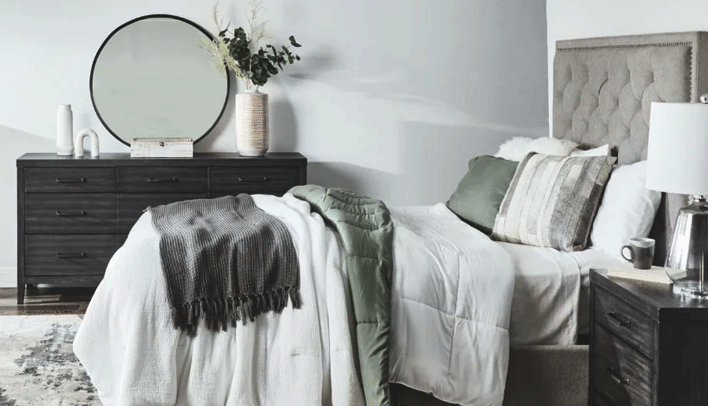
The Blue Train of South Africa has an aura of mystique about it. Kings and presidents have travelled on this magnificent moving five-star hotel. Its name has become synonymous with the ultimate in luxury and personal service. Pullman style suites on The Blue Train live up to its reputation for magnificence and splendor. The finest bed linen, marble tiles and gold fittings in the bathrooms and sheer opulence all ensure that travelers will never forget the time they spend on The Blue Train.
The routes of The Blue Train – both scheduled and chartered – take passengers through some of the most breathtaking countryside of Southern Africa. As the ever-changing scenery flashes past the windows, passengers can savoir exquisite meals freshly prepared on top chefs and complemented by the best wines South Africa has to offer.
The Blue Train celebrated its 50th anniversary in February 1996. Although officially named The Blue Train in 1946, the train’s enthusiasts trace its history to the 1890′s and the discovery of diamonds and gold in Africa.
Before the turn of the century, advertisements, offering direct-route journeys to the gold and diamond fields of South Africa, were couched invitingly: “England to Johannesburg in 19 days, the first 17 across the ocean on board a Union Castle Line vessel to Cape Town, the remaining 2 on a train steaming through mountains and valleys and over the South African veld to Kimberley, Northern Cape and the Reef.” accommodation and level of passenger comfort on the trains soon improved as the first years of the 20th century brought a new breed of trains which were considered to be the most luxurious anywhere in the world at the time.



These were the luxury precursors of today’s Blue Train. While the hoi polloi roughed it with smut in the eye prospectors and men of means they were able to disembark ships at Table Bay and climb straight onto a train which boasted showers, washrooms, electric lighting, fans, oak-paneled dining saloons, smoking and card rooms. The Imperial Mail and the African Express were among the lines which provided these special services.
At the same time Cecil John Rhodes, who built his influence and wealth on the Kimberley diamond fields and who founded the De Beers Mining Company in 1880, was forging ahead with his dream of ‘painting the map red’, an euphemism for extending the British Empire. Although his dream of a Trans-African railway between Cape Town and Cairo never materialized, he achieved the construction of a line between South Africa and, the then Congo Free State, formerly known as Zaire, now the Democratic Republic of the Congo. After the turn of the century, the railway line from Cape Town reached Victoria Falls, enabling the luxurious Zambezi Express to make excursions there as The Blue Train does now, almost a century later. The Imperial Mail and the African and Zambezi Express trains were on par for comfort and champagne service with The 20th Century Limited.
In the early 1920s the luxury Cape Town to Johannesburg trains were called the Union trains, with the Union Express running from Cape Town to the Reef and the Union Limited traveling the return route. Their accommodation became even more luxurious and spacious with the introduction in 1928 of articulated coaches equipped with heating, hot and cold water, bunk lights and bells for the summoning of the coach attendant.
A new dining saloon called Protea was introduced on the Union trains in 1933. The new coach and attendant kitchen car had revolutionary suspension. The exterior of Protea was finished in very distinctive colors: azure and cream with a silver roof. By 1936, both the Union Express and Union Limited were painted in the same livery. Three years later, new train sets made in England were placed in service. Luxury all-steel, air- conditioned trains, they were finished in blue and grey and became even more popularly known as “those blue trains”.
World War II caused a suspension of service which was resumed in 1946. The Blue Trains re-emerged as the premier express between the mail-boats in Cape Town and the industrial and economic hub of the country in the north- east. Steam gave way to electrification and diesel as the grand all-steel blue icon adapted to progress. More and more people booked on The Blue Train for the sheer pleasure of the experience rather than the business orientation of its early history.
Time and wear was took its toll on the grand old train and in 1965, the decision to build a new Blue Train was taken by the railways management and detailed design specifications were prepared. The opening paragraph of the specification document summed up the intent as follows: “These trains are to be of a standard of luxury and quality of material and workmanship equal to the best in the world.” Proposals came in from all over the world but it was the South African Union Carriage & Wagon Company outside Nigel, east of Johannesburg, won the commission in 1968.
A second generation Blue Train was completed in 1972. It became a symbol of luxury, sophistication and technological progress. Largely constructed by South Africans, the train incorporated the latest railway technology from Britain and Germany. The Blue Train’s reputation for comfort, excellent service, food, punctuality, Irish linen, crystal and silverware in the heart of some of the world’s most rugged and spectacular scenery, soon spread around the world.
Once again in 1995, after 25 years of service, the time had come to build a new Blue Train. On August 1st, 1997, the third incarnation of The Blue Train glided out of Cape Town station heralding a new era in the history of luxury train travel. On 5 October 1998, the new Blue Train began service from Pretoria.
Become an IGRS Branch Line Member today! Get Directions to Samuelson’s Garden Center.
Editors' related picks:
By the middle of the [[19th century]], the benefits brought by the host of advances of the industrial age were gradually begi...
China's vaunted magvle trains are the headline makers, running at unbelievable speeds up to 286 MPH while their steamer count...
Thomas & Friends - visit the "" Bull Moose" Railway Garden on Saturday June 9, 2012. The Isle of S...


(3 votes, average: 4.67 out of 5)